HRV vs ERV: which one does an Ontario home need?
Both bring in fresh air and save heat. The difference is moisture.
Reviewed by Abdullah Ghzail, licensed gas technician•Last checked November 2026
Quick answer: An HRV exchanges heat only, so it removes extra humidity in winter and suits most tight Ontario homes with damp windows. An ERV also transfers moisture, which keeps a dry home from getting drier in winter and keeps humid air out in summer.
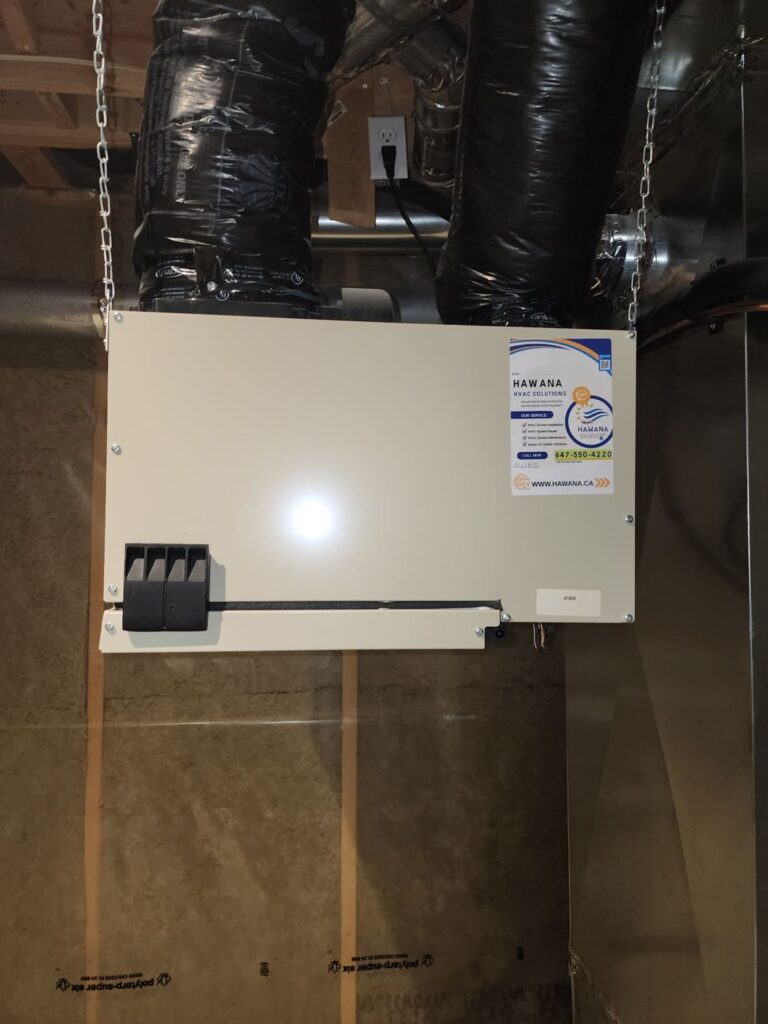
The difference
| HRV | ERV | |
|---|---|---|
| Recovers heat | Yes | Yes |
| Transfers moisture | No | Yes |
| Winter effect | Dries the home | Holds more humidity in |
| Summer effect with AC | Brings humidity in | Keeps more humidity out |
| Hawana price, installed | from about $3,200 | from about $3,300 |
Choose an HRV if
- Your windows fog or drip in winter
- The home is newer and tightly sealed
- Several people live in a smaller home, with lots of cooking and showers
Choose an ERV if
- The air feels dry in winter: static shocks, dry skin, a humidifier running hard
- The home is larger with few people
- You run air conditioning all summer
Do you need one at all?
New Ontario homes are built tight and need mechanical ventilation. In older, leakier homes it is optional, but it helps with stale air, odours and window condensation.
Maintenance
Clean or replace the filters every 2 to 3 months and wash the core once a year, following the manual. Keep the outside hoods clear of snow and lint.
Common questions
Is an HRV or ERV better for Ontario?
An HRV suits most tight Ontario homes with winter condensation. An ERV suits homes that feel too dry in winter or run AC all summer.
Should an HRV run all the time?
Yes, on low speed. It is designed to run continuously and boost when bathrooms or the kitchen are in use.
How much does an HRV cost in Ontario?
From about $3,200 installed using existing ducts, or about $3,800 with its own ducts, at Hawana in London.